"I'll resist the urge to let loose, though, and simply say that (1) "Less-secure applications" is crude scare-mongering by Google that means little and is mainly intended to serve their political agenda, and that (2) OAUTH2 is among the most poorly-standardized and ill-considered hacks I've ever encountered in thirty years of serving the Internet."
I would like to read his full rant about OAUTH2 for email authentication!
Wish I could upvote this more. I think the main part of the post is short enough to post here in full? It's spot-on!
> Now, this is a "hot button" issue for me - it will get me started, and if I'm not forcibly held down, it can be very hard to stop me from ranting almost indefinitely. I'll resist the urge to let loose, though, and simply say that (1) "Less-secure applications" is crude scare-mongering by Google that means little and is mainly intended to serve their political agenda, and that (2) OAUTH2 is among the most poorly-standardized and ill-considered hacks I've ever encountered in thirty years of serving the Internet.
> That said, GMail's size makes it an effective bully, and regardless of what I might think about OAUTH2, as they say in Star Trek, "resistance is futile". Accordingly, we have been working on implementing support for OAUTH2 in Pegasus Mail, and already have a basic working proof-of-concept on which we can build going forward. We expect to have working OAUTH2 support for GMail (and at this stage, only GMail) well before it will be necessary for continued use of the service. One of the main flaws of OAUTH2 is that it has to be implemented on a service-by-service basis, and at this time we do not have plans to support services other than GMail, although we will review this position over time as required.
It looks like their OAuth2 is compliant with OIDC which is way easier to deal with than vanilla Oauth2. OIDC makes things consistent and clear. In practice OAuth2 without the OpenID bits is loosely glued together vendor specific bits.
My company in 1996-99 used Pegasus mail extensively to manage emails besides mutt, Eudora mail.
Also provided mercury mail as a standalone small mail relay and newsletters servers to some companies as it supported mailing list management by a file which was generated from a web app.
Just in the subsequent jobs moved away from Pegasus as mutt and Thunderbird being open source were preferred by the team.
Later with Fortune 500 moved to lotus notes and outlook with exchange and both were a horrible experience.
Pmail is one of the best email client on windows, much better than outlook and lotus notes.
Congratulations to the author to be able to keep this client and server alive and constantly updating it.
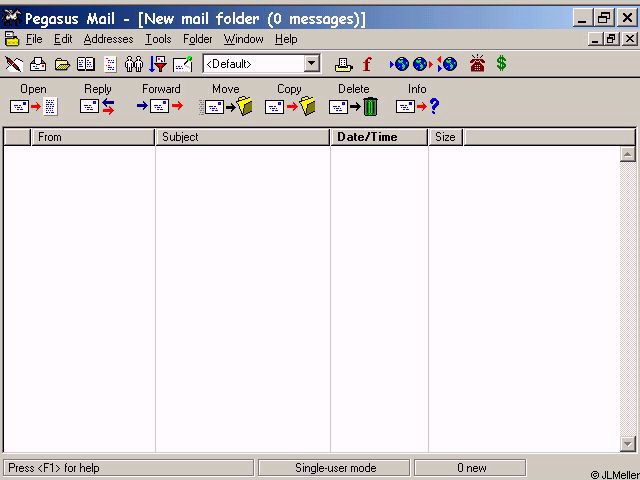
Admittedly, the developer has slowed down a bit - Pegasus Mail 5 has been announced since 2006 - and I wonder how the next incarnation will look and feel. But it is calming to know that the world where web browsers are not the best option to read and write e-mail messages is not going to go away soon.
Even though developer slowed down, he did not abandon the project and continue to develop it in spite of not making it open source.
This requires tenacity and persistence, which is at display in this project.
I moved away from this programs since MS Windows is not important for my company or my customers. My teams and I on personal level didn't touch any MS windows OS or machine for over 6 years now. No one in my team even wants to touch anything with Microsoft OS, they prefer either FreeBSD, Linux or Mac OSX (mostly used as unix with a good peripheral device support). In a rare case if some customer wants some support on windows the first thing to do is to install WSL with Ubuntu and then it becomes useable.
Lotus notes seemed like some neat ideas that we're allowed to mutate and harm each other before being packaged up. I didn't use it much since it was a bit before my time but when it wasn't hosed it was weird and confusing.
My personal anecdote: In 1994, I was a junior PC/Novell sysadmin in the Israeli Airforce headquarters in Tel-Aviv (as part of my mandatory military service). Generally speaking, security was kind of a big deal, but somehow there was a copy of pmail running around, and it became the de-facto standard internal email communication tool across the entire airforce headquarters (and probably beyond?). I remember later even plugging it via SMTP into one of the mainframe systems, so we could send and receive messages from pmail to the mainframe.
I doubt the author got paid for all those copies, but he definitely deserved to be paid generously for it. pmail was simple and just worked. I don't remember the specifics, but I remember the joy of using it even now.
Wow, here's a name I didn't expect to ever see again (and neither did I realize that they have such a long history)
I never used Pegasus much but many moons ago worked at a place that used Mercury MTS as a mail server. It worked wonderfully, and of all the software that particular server ran, Mercury was the least fussy and fairly easy (for sysadmin me, anyway) to set up. (Though IIRC leave the server window open, I think it was easy to accidentally kill it by closing the window. Surely that's fixed now)
Nice to see that they're still being updated, and that the author is still around, cares about, and is supported by his work. Seeing stuff like this gives me hope for the future as jobs become seemingly more and more bureaucratic and proprietary cloud stacks swallow up many of the things that I enjoyed
It's just fashion but I'd describe this website as vintage rather than dated. I quite like it and it fits the product. It also signals authenticity that it's still the same product and developer and that the project hasn't been taken over by some spyware maker.
I find it kind of amusing that, although it's an old website, it's not really lightweight. That is, a request transmits 45 kb on the first visit. This could be drastically reduced by using some css instead of gifs for the hover effect in the menu (ieks!).
I still use it today on my main Win 10 machine.
I used it first when netscape communicator announced end of live. Anyway - must be over 20 years now. Why not? Never change a running system - I guess...
Until I switched to google for my email, Pegasus Mail was my go-to client. Amazing to see it still kicking after all these years, and still updating! Kudos to him for keeping up with it!
I setup Pegasus Mail at a company in 1994, had no idea it was still around. Amazing dedication to keep it going all this time. NetWare came and went pretty quickly.
This certainly brings back some nostalgia. The university group I worked with back in my college days in the mid 90's used Pegasus mail. Reminds me of simpler days of school work and a summer spent upgrading Netware from 3.x to 4.x and moving from Charon to Mercury Mail. Not seen those since I graduated, but glad to see the developer still has active development and support for those programs.
I had a couple of my larger clients in the 90's running Pegasus into the early/mid 2000's, especially since it worked so well with Netware. Seldom gave me any problems even if the UI grew to be a little dated. I'd learned all kinds of management tricks around the databases, most of which I have forgotten now but I'm so glad this project still exists.
I tried running it a few years ago (it was a recent-ish 4.x version), but it crashed - so I chose The Bat! instead. The crash bug seems to be fixed by the way, but I'm happy with my current choice (which is Pandora Mail).



"I'll resist the urge to let loose, though, and simply say that (1) "Less-secure applications" is crude scare-mongering by Google that means little and is mainly intended to serve their political agenda, and that (2) OAUTH2 is among the most poorly-standardized and ill-considered hacks I've ever encountered in thirty years of serving the Internet."
I would like to read his full rant about OAUTH2 for email authentication!